
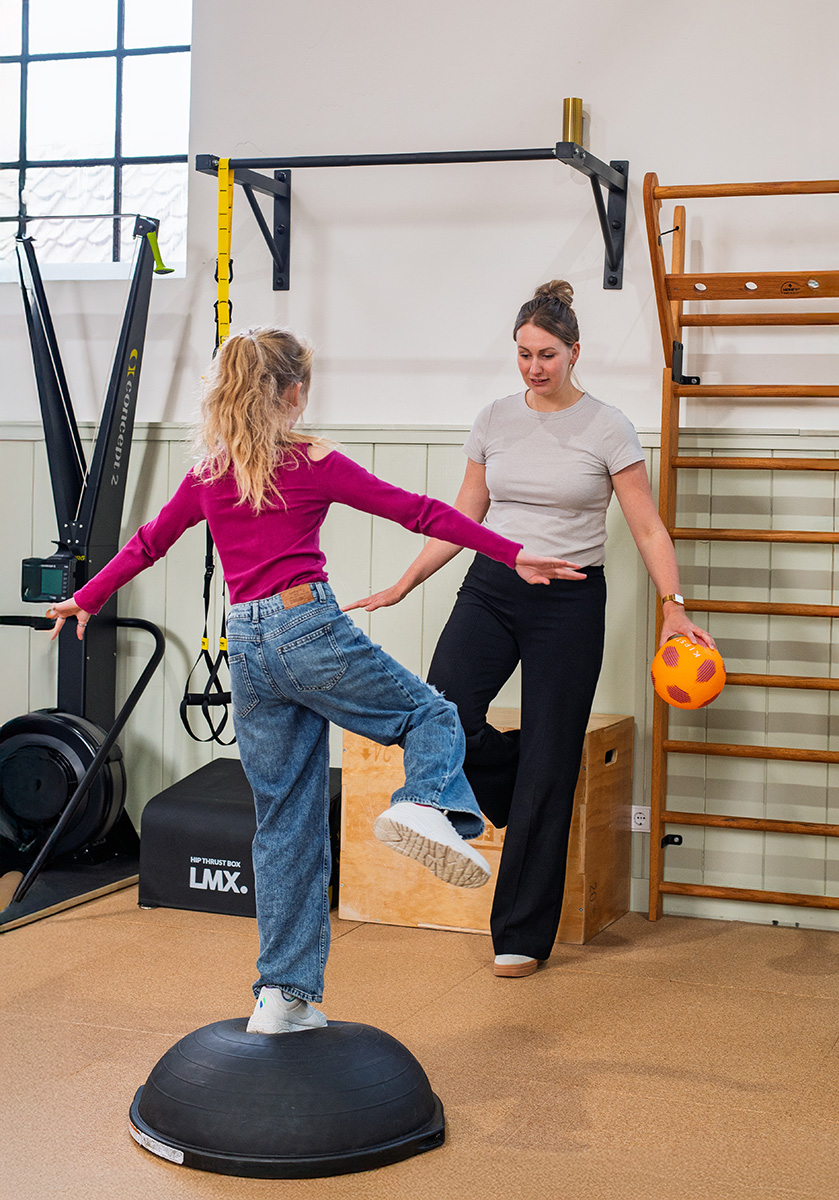
Marije Wiegersma works in our practice as a master Pediatric Physiotherapist. Here she treats children with a variety of movement and motor development problems.
What is it?
The pediatric physiotherapist specializes in observing, examining and treating children from 0 to 18 years old.
Much more than in adults, we have to deal with a constant change in children based on growth and development. Motor development can therefore take longer or deviate from what is usual. Because of these changes, some children then need more practice to learn a motor skill compared to others.
Paediatric physiotherapy is for all children who experience problems with motor movement at some point in their development, have pain during movement or experience challenges in movement due to an underlying condition.
The goal of pediatric physiotherapy is to playfully develop the child as optimally as possible, together with the parents and the environment.
Paediatric physiotherapy is directly accessible. You can contact us without a referral letter, for example because you are concerned that your child is lagging behind in development compared to peers or that your child has (pain) complaints in the body.
You can also get a referral for your child from the general practitioner, child health clinic doctor or specialist. For pediatric physiotherapy at home, a referral from a general practitioner or specialist is always required.
Reimbursement of pediatric physiotherapy
A maximum of 18 treatments of pediatric physiotherapy are reimbursed from the basic insurance. If more than 18 treatments are required, these treatments can be reimbursed from the parent’s supplementary insurance.
How does it work?
Through examination and standardized tests, the pediatric physiotherapist gets a complete picture of the motor level. Each age has a number of described skills. Based on this, the pediatric physiotherapist can determine whether the child’s development is delayed or abnormal.
The pediatric physiotherapist discusses the findings and draws up a treatment plan together with the child and the parents.
In order to get the most complete picture possible, additional information is often obtained from the teacher, pediatrician and other practitioners, of course in consultation and after approval from the parents.
Depending on age, the treatment takes place in the practice or at home.
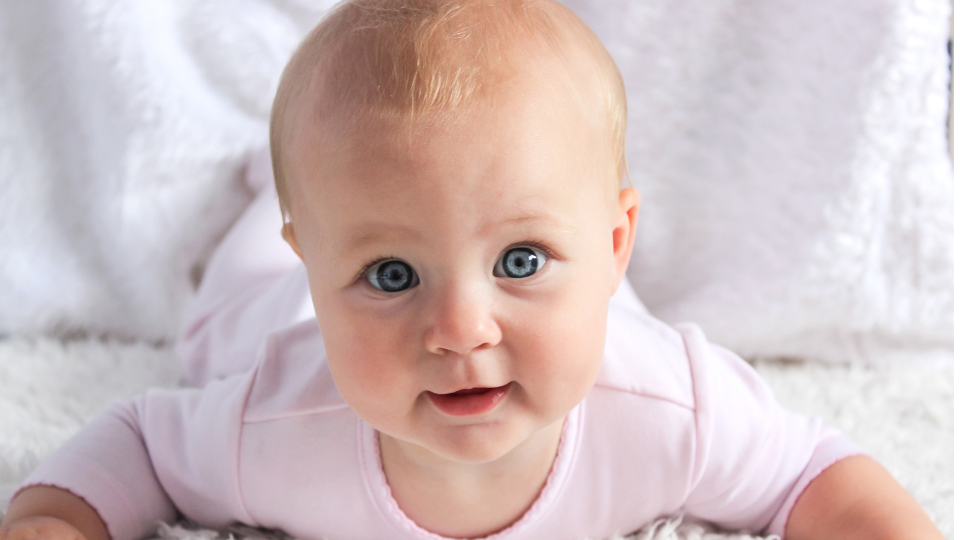
Babies and Toddlers 0-2 years
In babies, developments follow each other in rapid succession. The child learns to grab objects, roll over, sit, crawl, stand and to take first steps. Each child does this at their own pace. It is possible that problems arise during the development of these motor milestones that cause the child’s movement behavior to look different. Identifying any developmental disorders in time is of great importance.
Reasons for pediatric physiotherapy for babies are:
• A very weak or too tense baby
• A preferred position with a flattened head
• Frequent overstretching
• Restless babies or crying
babies• Difficulty achieving motor milestones or one-sided movement
• Buttock pusher
• Orthopedic complaints; for example, shoulder/arm complaints after childbirth or clubfeet
• Neurological problems; for example, Erb’s Palsy, Spina Bifida, brain damage
Children’s physiotherapy for children up to 2 years old takes place at home. This is a familiar environment for the child so that he/she feels safe and relaxed. In the treatment for babies and toddlers, posture and handling advice are central, in which parent instruction is very important. You can apply all advice directly in your own situation.
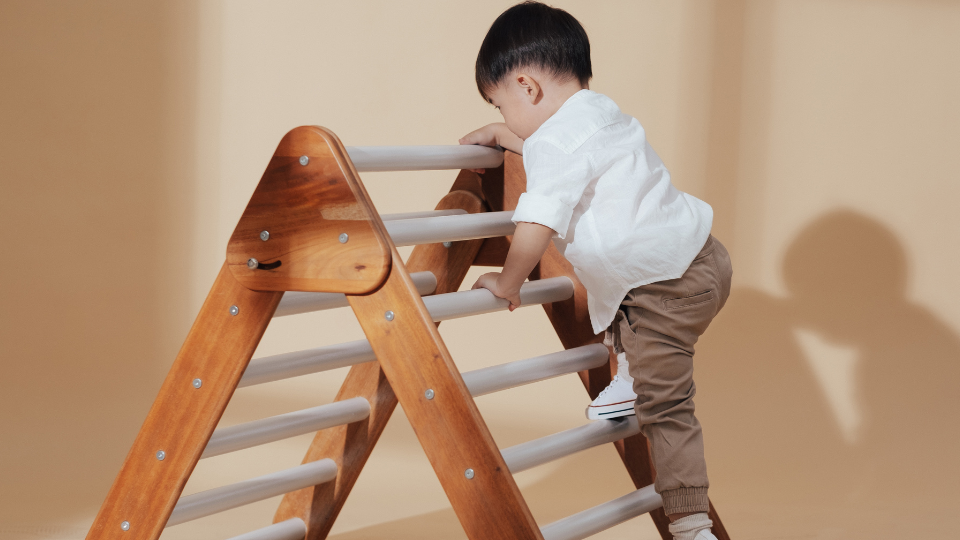
Toddlers and Toddlers 4-6 years
Toddlers and preschoolers have already achieved many motor skills milestones and now discover their environment in a playful way. In addition to further developing fine and gross motor skills, the child also learns to function independently and independently. Sometimes this does not happen completely by itself or there are motor challenges that raise questions about movement development at this age.
Reasons for paediatric physiotherapy for toddlers and preschoolers are:
- Moving stiffly or woodenly, walking or running
- Frequent trips or falls
- An abnormal position of the feet/legs or abnormal gait; toeing-in or toe-walking
- Difficulty with motor skills (jumping, hopscotch, ball games)
- Fear of movement
- Problems with fine motor skills (cutting / crafting / writing / drawing)
- Potty training problems
After inventory and observation, a pediatric physiotherapy diagnosis and treatment plan follows. In addition to practicing motor skills or reducing the complaint, we also work on stimulating more self-confidence in movement. This is an important exercise goal to function better in the physical and social environment.
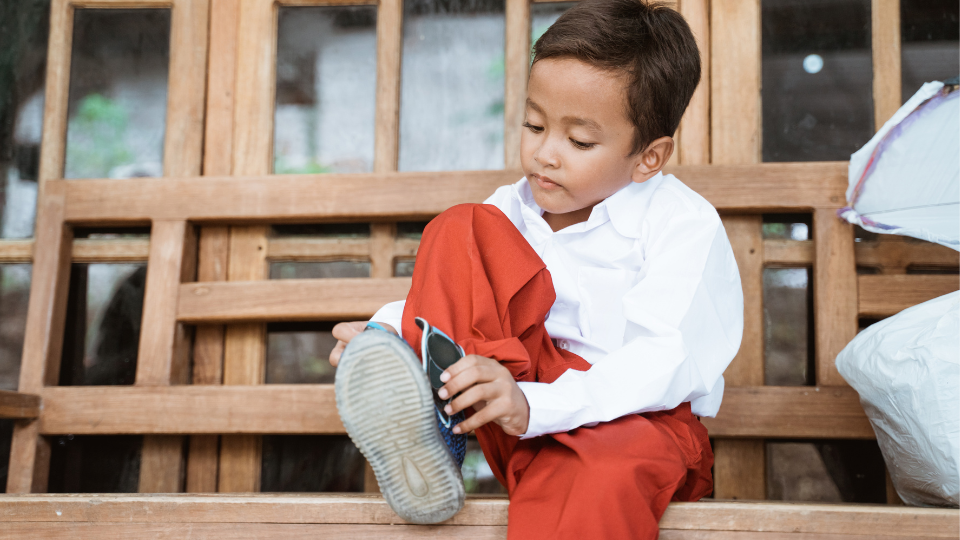
Primary school age children 6-12 years
A school-age child will understand and use his/her body better and better, making movement more fluid and refined. This requires a lot of practice for both fine and gross motor skills! There are new challenges in which different exercise behavior, towards friends, stands out.
There may also be a request for help from the teacher when the child has difficulty with certain tasks in the classroom or during gym lessons.
In addition, it is possible that an injury has occurred during exercise. Not being able to participate (properly) is often a consequence. If this lasts for a long time, it may even be that sports are stopped altogether.
Reasons for pediatric physiotherapy for school-age children are:
• An abnormal gait or posture
• (Long-term) pain when moving, reduced movement
• Sports injuries
• Orthopedic disorders of the knee, ankle, wrist, shoulder, back
• Recovery after a bone fracture or surgery
• Hypermobility
• Fine motor problems (buttons, zippers, crafts)
• Problems with writing (difficult to read handwriting, cramps or tired hand when writing)
• Lateralization problems (no dominant preferred hand)
• Movement with ADHD or ASD
• Overweight
Explanations and advice to the parents and the environment (teachers or other stakeholders) are also an important aspect of the treatment for primary school children. The treatment focuses on being able to keep up with peers as well as possible while playing, at home, at school and during sports.

Young people 12-18 years
Teenage age is an age when young people grow a lot and sometimes quickly and when the joints and muscles are in full development. Growth, together with the intensity of exercise/sport, is often one of the factors that causes a physical or sports injury. The most common injuries in young people are pain in the knees and heels. At this age, many physical changes take place, which also makes the body susceptible to postural problems.
Reasons for pediatric physiotherapy in young people are:
• (Sports) injuries / overuse complaints
• Growth-related pain complaints
• An abnormal gait or posture
• Orthopedic disorders of knee, ankle, wrist, shoulder, etc
• Breathing problems
• Head and neck pain complaints
• Overweight


